Lighting can make a massive difference when it comes to keeping older adults safe at home. I’ve seen how something as simple as a better lamp or a brighter bulb often stops a minor stumble from turning into a major injury. Fall prevention isn’t about turning your home into a fortress; it’s mainly about noticing the small details, and lighting is one area where those details really matter.
Affiliate Disclosure: This post contains affiliate links. If you purchase through one of these links, I may earn a commission at no additional cost to you. As an Amazon Associate I earn from qualifying purchases.
The Impact of Proper Lighting on Fall Prevention
Researchers and healthcare professionals have shown for years that poor lighting is one of the top reasons older adults trip, slip, or lose their footing at home. Vision changes with age, especially in low light, and shadows or dark areas can hide hazards most people just don’t notice. Falls are a leading reason older folks lose their independence, but these accidents are very often preventable. Good lighting isn’t flashy or expensive, but it does help keep pathways clear and make daily activities easier and safer.
Different types of lighting play different roles. Overhead fixtures, task lamps, and especially those little nightlights can work together to cover hard-to-see spots. Flickering bulbs, burnt out lights, and “mood” lighting choices can make even a familiar home feel difficult to steer through at night. So, choosing and placing lights carefully is worth the effort; it helps boost confidence as well as safety.
Why Lighting Needs Change With Age
I’ve worked with many families who underestimate just how much vision changes as people get older. Pupils get smaller, the eyes take longer to adjust between bright and dark areas, and glare becomes more bothersome. What looked fine at age 50 can become risky by age 75.
- Slower adjustment to changes in brightness: Moving from a welllit space to a dark hallway or vice versa can leave someone “blind” for a few critical seconds.
- Glare sensitivity: Shiny floors and uncovered bulbs can actually make it harder to see clearly by scattering the light or creating confusing reflections.
- Reduced color contrast: Dim lighting makes it tougher to see objects, rugs, or changes in floor level, turning everyday items into trip hazards.
Family members often don’t notice these changes unless they walk the home as if seeing it for the first time. Regular checkups on lighting—especially after any changes in vision or health—help ensure things stay safe and comfortable.
Room-by-Room Lighting Tips to Prevent Falls
Each area of a home has its own quirks. I usually suggest evaluating each room from the perspective of someone with tired eyes or maybe less steady feet. Here’s a breakdown of what I look for:
- Entryways: Bright, shadowfree entry lighting makes a difference, especially when carrying bags or keys, so outdoor fixtures and motion sensors outside your front and back doors are worth checking.
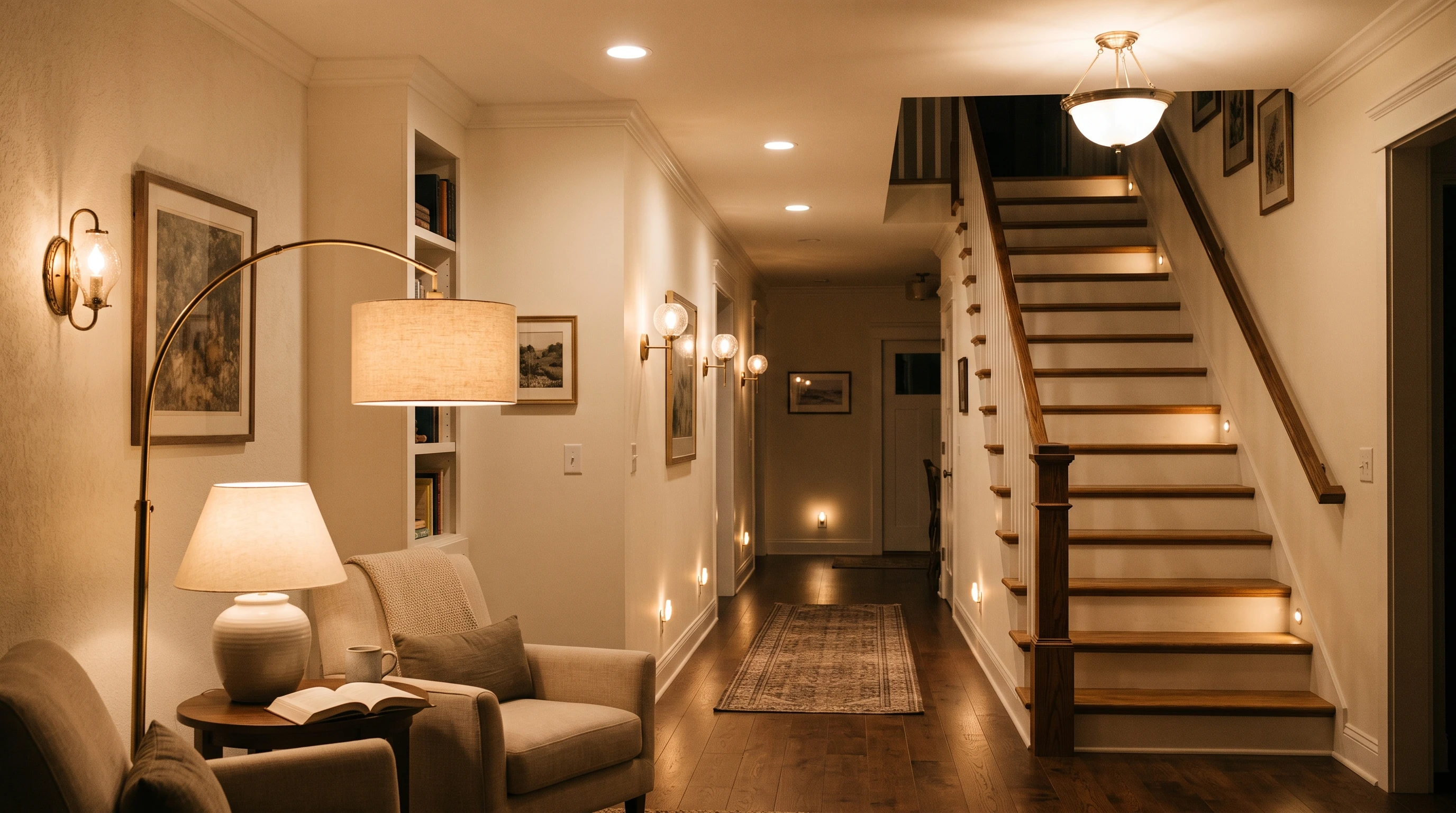
- Hallways and Stairs: Nightlights or lowlevel LED strips along the wall or stairs help make every trip, day or night, safer. Stairwells always need consistent, nonglare overhead lighting.
- Kitchens: Undercabinet lights or puck lights are smart for spotting dropped utensils or spills. Avoid placing lights directly in your line of sight to keep glare at bay.
- Bathrooms: Motionactivated nightlights by the toilet and sink cut down on fumbling for switches in the dark and make those latenight trips safer. Nonslip rugs and grab bars round things out, but lighting is the first step.
- Bedrooms: Bedside lamps or wall switches within reach help a lot. Enough light for someone to see where they’re walking—even halfawake—is super important.
- Living Rooms: Multiple lighting options, like floor lamps and table lamps, combined with natural light, make steering through easier and less straining on the eyes. Check out my article on living room fall prevention strategies for seniors.
Warning Signs and Common Mistakes With Lighting
Some hazards are obvious, but others only show up in daytoday life. Here’s what’s worth checking during a home walkthrough:
- Burnt out bulbs: Easily overlooked, especially in fixtures that aren’t used often. Replacing bulbs regularly or switching to longlife LEDs saves hassle.
- Cords and clutter: Extension cords and misplaced lamps create new trip hazards instead of solving the old ones.
- Overreliance on a single light source: A big overhead light might not reach floor level or corners, leaving pockets of darkness.
- Ignoring outside lighting: Steps and porches can be just as risky, especially in bad weather; motion sensor lights help.
- Glare from shiny surfaces or exposed bulbs: Not usually a problem for younger eyes, but very distracting and confusing if vision is already compromised.
An experienced EMT or safety manager might notice loose rugs or uneven thresholds catching the light at certain times of day. Those “hot spots” are worth paying attention to.
Room Checklist: Lighting Safety
- Check for dark areas, especially near steps or thresholds
- Replace all burnt out or flickering bulbs
- Add nightlights in bedrooms, hallways, and bathrooms
- Look for glare issues and add lamp shades or change bulb placement as needed
- Keep pathways free of lamp cords and clutter
- Consider motionactivated lights for busy areas
- Check outdoor walkways and entry points
Affordable Solutions and Upgrades
Fall prevention isn’t about spending a lot of money. There are simple fixes and upgrades that really work:
- LED bulbs: They last much longer than traditional incandescent bulbs and come in soft or daylight options, helping mimic natural light throughout the day.
- Plugin nightlights: These are very inexpensive, easy to install, and provide good visibility for nighttime trips. Many options are available, including dusktodawn and motionsensor types.
- Stickon puck lights: Great for closets or other dark corners where wired lighting might be tricky.
- Lamp timers or smart bulbs: Setting lights to turn on around sundown and off in the morning covers nights when someone forgets to hit the switch.
- Dimmer switches: These let you adjust lighting to the best level for daily activities without making spaces too harsh or too dim.
Talk to an electrician if you notice frequent blown fuses, outdated wiring, or rooms where lights just “never seem bright enough.”
When to Ask for Professional Help
Some lighting upgrades are simple DIY jobs, but a few things signal it’s time for a pro:
- Wiring that looks old, frayed, or warm to the touch
- Exposed bulbs or fixtures with missing covers
- Switches or plugs that don’t work consistently
- Odd smells or flickering from lights even after changing bulbs
An electrician can fix these issues and suggest energyefficient, brighter fixtures that do a better job without raising electricity costs. Occupational therapists are also a great resource; they’re trained to spot lighting problems and other hazards others might miss, and they usually have practical, budgetfriendly ideas.
Questions Families Should Discuss
- Does anyone have trouble seeing in certain rooms or on stairways?
- Are night trips to the bathroom confusing or disorienting?
- Is glare from windows, TVs, or lamps a problem?
- Has anyone slipped or tripped—even if it didn’t lead to a fall?
- Is there enough lighting outside for evening arrivals or visitors?
It’s really important to check in regularly and encourage honest feedback. People sometimes downplay their struggles. Creating a fall prevention plan together—maybe walking through the home at night or asking a visitor for a fresh perspective—helps bring possible problems into focus.
Frequently Asked Questions About Lighting and Falls
Question: My family member says they “see fine.” Should I still add more lights?
Answer: Even those with strong eyesight can benefit from better lighting, especially with agerelated vision changes. Added lights don’t need to be harsh or intrusive; they can help avoid small but risky trip hazards and boost confidence moving around.
Question: Are smart lights or motion sensors really worth it?
Answer: Smart bulbs and motionactivated lights make things safer and easier, especially for those with memory issues or people who often get up at night. They’re usually affordable and simple to install. Just make sure settings don’t create a sudden burst of bright light that could startle someone awake.
Question: Do lights with “daylight” bulbs really help older adults see better?
Answer: “Daylight” or “cool white” LED bulbs better mimic natural sunlight and improve visibility, especially on cloudy days or in windowless spaces. Warmer “soft white” bulbs can be easier on the eyes in bedrooms or resting areas. Mixing both types can give you the best of both worlds.
Encouraging Ongoing Fall Prevention
Even small improvements, like swapping out bulbs, adding a nightlight, or moving a lamp, can make life at home safer and more comfortable for older adults. Good lighting, paired with clear pathways and regular safety checkups, helps prevent accidents and supports independence. Fall prevention isn’t a onetime fix; it’s a project you revisit with changes in health, vision, or living situation. Each step, no matter how small, strengthens confidence and keeps people living at home longer. It’s worth checking lighting today; you’ll likely spot opportunities for easy, helpful upgrades throughout your home.
Author Experience: For example, I once worked with an older couple whose kitchen was dim and full of shadows around the cooktop and sink areas. Both partners felt unsteady cooking at night but never realized lighting was the main culprit. After adding brighter, energy efficient undercabinet LED strips and a couple of plugin nightlights along the way to the bathroom, they both reported feeling much more confident and having fewer close calls. Addressing these small lighting changes made a real difference in their daytoday comfort, safety, and overall independence. Regular follow ups confirmed that they were happier and more at ease in their own home, just from this easy adjustment.
Thank you for sharing such a practical and well-researched guide. I especially appreciate how you highlighted that effective fall prevention often comes from simple, affordable improvements like better lighting, rather than major home renovations. Your room-by-room recommendations and emphasis on regular safety assessments empower families to take proactive steps that enhance both independence and confidence for older adults.
Thanks Kavitha I appreciate your feedback am I am glad it resonated with you. Cheers!
My mom always needs to have all the lights on in the house so she can see better, especially when she is moving around. For me, I’m usually okay with having just one light on, but I can understand why having better lighting can make someone feel safer. This article made me realize that good lighting can be especially important for preventing falls. Do you think having too many lights on can also be distracting, or is brighter always better for safety?
Hey thanks Monica for the feedback. It really depends on the person and their living area. I wouldn’t say having lights on 24-hours is recommended. That can cause sleep issues in the person that could cause medical issues down the road. I would research motion activated lights and a bedside flashlight your Mom could easily access if she needs to get up. Also, if there dark places in the home making sure you have some lighting options to use ie: flashlight, motions senror lights, etc. Stay Safe!