 Most homes feel safe and inviting, but they can secretly be full of dangers for seniors. Loose rugs, pesky cords, and dark hallways can all trip someone up if they’re not careful. You might see lovely decorations and cozy furniture; I see sneaky hazards ready to spoil a peaceful afternoon.
Look around each room, starting with the floors. Are there throw rugs that can slip out from underfoot? Even a seemingly stable rug can become hazardous. Consider swapping them for non-slip mats or secure those edges with tape designed for rugs. Remember, mobility aids could get caught too.
Lighting is crucial. As we age, we sometimes need more light to see clearly. Lamps with adjustable arms or overhead lighting can make all the difference at night or during gloomy days. Make sure light bulbs are always working and keep lamps within easy reach of seating areas.
Pay attention to where items are stored. Are there objects on high shelves that require a step stool to reach? Try rearranging so everyday items are within arm’s reach. A kitchen reorganization can work wonders, cutting down on the need to stretch or climb—both risky moves.
Don’t just look down—look up and all around. Seek out clutter that might be on countertops or tables. Keeping things streamlined and organized not only helps with finding items quickly but reduces the obstacles that come with tripping over them.
These are the small steps that, collectively, can create a safer space that, ultimately, maintains cherished independence without feeling like a loss of comfort or style.
Simple Home Modifications for Fall Prevention
When it comes to keeping our homes safe from falls, a few straightforward changes can make a world of difference. The best part? You don’t always need a complete overhaul to see big improvements.
Installing grab bars in critical spots like bathrooms can give an extra hand where it’s needed most. Nothing fancy—just solid support for getting in and out of bathtubs or standing up from toilets. Similarly, stair rails along all steps, whether they lead to the main floor or the front porch, help with stability. These small adjustments can significantly boost confidence at home.
Look into non-slip mats, especially in areas prone to moisture like bathrooms and kitchens. These add a layer of safety to otherwise dangerous spots. Mats near the sink or in the shower provide a bit more assurance with every step.
Consider furniture layout too. Bulky coffee tables and tight passageways are the submerged rocks in the river of home life. Repositioning furniture to create clear paths can prevent those unintentional stumbles when you’re not expecting them.
Sometimes, prevention is as simple as offering more places to hold onto or gently securing loose wires along walls. These changes don’t just protect; they enhance everyday ease of movement, making the home not only safer but more enjoyable to live in.
Remember, it’s about working smarter, not harder, to create an environment that supports safety without sacrificing comfort or dignity. Even little tweaks can have a significant impact on safety and peace of mind.
Harnessing Technology for Enhanced Safety
Today’s technology opens up a world of possibilities that make living at home safer and more secure for seniors. No need to be on the cutting edge of tech to gain significant benefits—it’s all about finding what works for you.
Medical alert systems are an excellent starting point. They offer peace of mind by ensuring help is just the press of a button away, particularly for those who live alone. Easy-to-use wristbands or pendants are there when you need them but don’t get in the way when you don’t.
Smart lighting can also be hugely beneficial, delivering the right amount of illumination at just the right times. Motion-activated lights make navigating middle-of-the-night trips to the bathroom safer without fumbling for switches. Adaptable solutions like these are budget-friendly and powerful.
Considering wearables? Some options now track movement patterns to identify falls or other anomalies. Devices that send alerts to family or caregivers mean more eyes can monitor safety, without being too intrusive on privacy.
When choosing tech, collaboration is key. Involvement of family members or caregivers ensures that technology serves everyone’s needs best, fitting the lifestyle of the person, not the other way around.
No one tool solves everything, but identifying the right technologies can support independence while providing reassurance. Remember, technological strategies should enhance life, making homes both safe and compatible with everyday comforts.
Encouraging Safe Habits and Engagement
Staying active is one of the best defenses against falls. Regular exercise not only helps maintain balance but also strengthens muscles, which can prevent those minor trips from becoming major falls. Think simple: walking, yoga, or even chair exercises can do wonders for stability.
Footwear can be a surprise culprit in many falls. Shoes that fit well and have non-slip soles are essential, both indoors and out. Say goodbye to worn slippers or ill-fitting shoes that offer little support. It’s a small change that makes a big difference.
Keep an eye on regular health check-ups. Vision can change without warning, and sometimes a new prescription makes all the difference in recognizing hazards. Beyond vision, regular reviews of medications with a healthcare provider can spot balance-affecting side effects that might otherwise be overlooked.
Having conversations with healthcare providers about safe physical activity and any concerns related to dizziness or imbalance is another layer in creating a safe environment. They can offer tailored advice that matches medical profiles and physical capabilities.
Engaging with others socially and physically keeps both body and mind active. Whether it’s a local walking club or a community center class, these moments get individuals moving and provide a support network. These are opportunities to stay both socially connected and aware of any physical challenges and successes.
Together, these habits form a lifestyle that supports not just the absence of falls, but a presence of dignity and independence. It’s about building routines that fit seamlessly into life while maintaining freedom and safety.
Involving Family Caregivers in Safety Planning
The journey to creating a safer home isn’t one that should be tackled alone. Family caregivers play a crucial role, often acting as both facilitators and partners in this process. Their involvement can make a huge difference in addressing safety concerns. It’s not just about adding safety features but understanding the unique needs and abilities of those they care for.
Caregivers bring fresh eyes to the situation—perhaps noticing areas that have become familiar blind spots to those who live there every day. Their observations can lead to better identification of potential hazards that might seem benign to those who navigate them regularly.
Communication is key. Regular discussions about safety preferences, priority areas to address, and any concerns with current setups keep everyone on the same page. These conversations are better held early and often, ensuring that decisions are made collaboratively and everyone’s voice is heard.
Supporting daily routines is another critical aspect. Caregivers can assist with setting up technology solutions or helping with furniture re-arrangement, making daily life smoother and reducing the risk of accidents.
When faced with more substantial modifications, caregivers can be instrumental in researching affordable options, hiring professionals, or accessing community services that offer assistance programs. They provide an added layer of security and sometimes peace of mind, knowing there’s someone else looking out for their loved ones.
By actively involving caregivers, the collective effort fosters an environment where independence is preserved, safety is prioritized, and living at home remains a joyful and secure option.
Small Changes, Big Differences
Preventing falls isn’t a one-time fix; it’s an ongoing commitment. Every small change you make now can lead to substantial long-term benefits. It’s less about the fear of falling and more about enjoying the comfort of home safely.
Today’s focus might be on securing a rug or adding better lighting. Tomorrow, it’s attending a local exercise class to boost balance. Each step along this journey adds up, ensuring that homes remain the warm, welcoming spaces they’ve always been.
Remember that maintaining independence is a process. Continuous evaluation and adjustments can ease both physical and mental challenges, providing comfort without demanding significant upheaval. You must know the difference between mechanical falls and syncope falls.
Celebrate small victories—each grab bar installed or family conversation about safety is a step toward sustained independence. These changes reinforce both the physical security and the confidence needed to enjoy every corner of the home.
The message is clear: a little attention today keeps the freedom to live comfortably at home tomorrow. Independence thrives when safety becomes second nature, and that’s a journey worth embarking on.
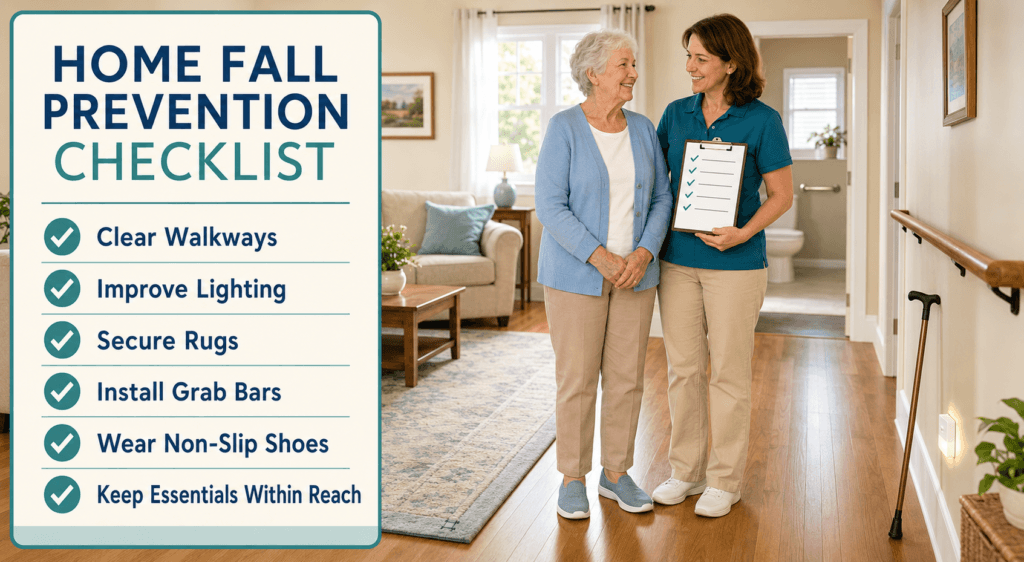
Home Fall Prevention Checklist
Entryways
☐ Walkways are clear of clutter, leaves, snow, and ice.
☐ Steps are in good repair.
☐ Handrails are secure on all stairs.
☐ Porch lights are working.
☐ House numbers are easy to see.
Living Room
☐ Remove loose throw rugs or secure them with non-slip backing.
☐ Electrical cords are kept out of walking paths.
☐ Furniture provides clear walking space.
☐ Frequently used items are within easy reach.
☐ Good lighting is available in all areas.
Kitchen
☐ Clean up spills immediately.
☐ Store commonly used items between waist and shoulder height.
☐ Use a sturdy step stool with a handrail if needed.
☐ Floors are dry and clutter-free.
Bathroom
☐ Install grab bars near the toilet and inside the shower/tub.
☐ Use non-slip mats in the shower and on the bathroom floor.
☐ Raised toilet seat if recommended.
☐ Keep toiletries within easy reach.
☐ Ensure bright lighting.
Bedroom
☐ Lamp or light switch is within reach of the bed.
☐ Nightlight is available.
☐ Clear path from bed to bathroom.
☐ Telephone or cell phone is nearby.
☐ Shoes or slippers have non-slip soles.
Hallways & Stairs
☐ Handrails on both sides if possible.
☐ Stair treads are non-slip.
☐ Steps are free of clutter.
☐ Light switches are available at both ends of stairs.
☐ Nightlights installed.
General Safety
☐ Wear properly fitting, non-slip shoes.
☐ Keep eyeglass prescription current.
☐ Review medications with your healthcare provider or pharmacist.
☐ Exercise regularly to improve strength and balance.
☐ Use a cane or walker correctly if prescribed.
☐ Keep emergency numbers easily accessible.
☐ Consider a medical alert system if at higher risk.
Annual Safety Review
☐ Vision exam completed.
☐ Hearing checked.
☐ Medications reviewed.
☐ Home safety inspection completed.
☐ Balance and mobility assessed.
Goal: Every “Yes” reduces the risk of a fall. A few simple changes today can help maintain independence and prevent serious injuries.
My mother‑in‑law is in her early 90s, and just recently she tripped and fell, hurting her hips badly. It’s been a tough season for our family, and my husband, along with his elder sisters, has started discussing the possibility of hiring a caregiver to help her feel safer and more supported at home. Reading through these practical tips reminded me how even small adjustments, like better lighting, non‑slip mats, and grab bars, can make such a big difference in preventing accidents.
From your experience, which home modifications tend to give seniors the most immediate sense of confidence after a fall? That’s something we’re trying to prioritize as we plan the next steps for her care.
Hi Alysanna thanks for sharing. I would say three things I believe make a big difference are grab bars in the major living areas (especially bathroom and tub area) they can use to at least sit up even if they can get toally up. This gives them the ability to regain their strength. Laying flat causes respiratory and blood flow issues that can lead to serious medical issues even death if not found relatively fast. Second, a way to call for help. Something that that wear like a smart watch or a specific device made for falls that will trigger an alarm to a call center and family if it detetcs they are horizontal. The technology in this area has really improved in recent years also the cost is reasonable and a no brainer in my book. Lastly, I would add additional lighting, especially soft lighting at night. They make lights that will trigger when then get out of bed. I hope this helps!
Some wonderful tips for avoiding accidents for the elderly here and some of them are so simple like simply removing a loose mat or providing better lighting, but we don’t think of them.
My late mom in law often had falls towards the end, and I think it was ill fitting shoes. She insisted on wearing sandals, whereas we thought sneakers were much more practical and comfortable and less chance of tripping over the front. Sometime they are their own worst enemies.
Hi Michel, ya sometimes all we can do it suggest but in the end it’s up to them. But yes just clearing other trip hazards is a major part of prevention. I tripped over my bed spread hanging over on the ground the other day LOL! Thank god I caught myself and didn’t hit the floor 🙂 If I was 10 years older… Maybe not. Thanks for sharing!