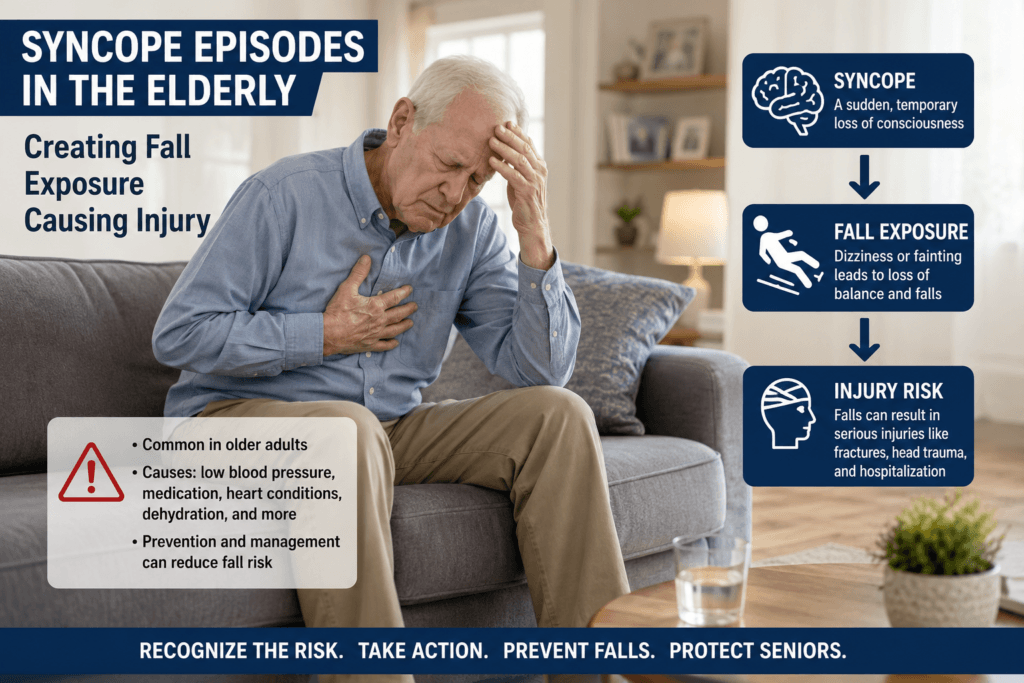
 Imagine going about your day and suddenly feeling light-headed or even blacking out. That’s syncope’s stealthy game. It’s more than just a faint feeling. It’s a condition that can put elders at risk of serious falls, especially in the comfort of their own homes.
Syncope is often brushed off as just a momentary ‘spell,’ but for many older adults, it’s a serious health concern. It’s essentially a sudden drop in blood flow to the brain, leading to unexpected loss of consciousness. With elders, their balance can already be a bit precarious, so this suddenly cutting out without warning can be dangerous.
Now, why does this often slip under the radar? Partly because it can masquerade as things we might chalk up to ‘normal’ aging—little dizziness here, a bit of fatigue there. We’re not talking something that screams its arrival; it’s sneaky. Syncope demands more than a passing glance if we’re genuinely looking to keep our loved ones safe and steady on their feet. It is also important to understand the what causes senior mechanical falls at home.
Let’s sprinkle in some numbers. Studies show that nearly a third of people over 70 will experience at least one syncopal episode. And as folks get older, syncope becomes a more frequent uninvited guest. What’s crucial is understanding that these falls aren’t just a bump and a bruise—they can lead to serious injuries and even affect an elder’s independence.
Hearing real stories can sometimes make the concept hit home. There’s the tale of Mrs. Johnson who always prided herself on being as active as they come. Then, one sunny afternoon she found herself on the floor after a seemingly harmless faint. Turned out, what her family called as clumsiness was syncope! After that wake-up call, they got proactive. Syncope isn’t just data and figures; it’s real lives.
Recognizing the Telltale Signs of Syncope
Recognizing the symptoms of syncope is your first line of defense. You might think it’s just tiredness or a brief woozy moment, but syncope sends out signals that shouldn’t be ignored. One minute someone might feel just fine, and the next, there’s a wave of dizziness that crashes over them. This isn’t just a head rush—it’s different.
Keep an ear out for complaints about blurred vision that pop up out of nowhere. Or maybe they mention feeling overly warm or sweating buckets in a cool room. Feeling lightheaded, like their legs have turned to jelly, or ringing in their ears, could also be part of the syncope sneak attack.
Understanding the nuances between syncope and something like general dizziness can make all the difference. Dizziness might hang around for a while, like that friend who overstays their welcome. But syncope? It’s swift, more akin to a light switch flipping off. One second here, next second gone.
Lets chat about some potential predictors. For those with heart issues, episodes of syncope might drop by more often. It’s not just about age catching up—heart health, blood pressure swings, and even dehydration set the stage for syncope’s arrival.
Medical experts stress the importance of keeping things in check. Regular visits to the doc for cardiovascular assessments can provide insights that catch fainting spells before they’re even a thing. So, if you’re spotting these signs, don’t sit on it. It might be time to ring up the doctor for a bit of professional wisdom.
Effective Prevention Strategies to Mitigate Fall Risks
One of the best defenses against syncope-related falls is making home adjustments. Picture this: a home where safety is built-in with grab bars in the bathroom and non-slip mats on those smooth floors that can spell trouble. These small changes help prevent big problems.
 Keeping an eye on medication and treatment options can make a world of difference too. Some meds lurk in the background, potentially causing blood pressure to dip and usher in syncope. Having a frank chat with doctors about current medications might uncover some surprising culprits.
Keeping tabs on heart health is just as crucial. Regular check-ups can catch shifts in blood pressure or heart rhythms before they lead to thud in the hallway. Understanding how the heart impacts syncope could be the trick to preventing the next episode.
Family and caregiver involvement is another cog in this wheel. Prompt recognition of symptoms and a quick response can stop a fall in its tracks. Educating them about these signs can mean the difference between a graceful recovery and a tumble. So don’t hesitate to rope in a team; it takes a village, after all!
How to Respond During a Syncope Episode
Handling a syncope episode doesn’t have to feel overwhelming. If someone suddenly turns ghostly pale or starts to sway, it’s time to spring into action. The first step is to stay calm. Panic isn’t helpful, but quick, collected thinking is.
If they start going down, try to gently ease them to the floor to prevent injury. Keeping their legs raised above heart level helps boost blood flow back to the brain. Let’s give gravity a little assist, right?
Once they’re safely settled, encourage them to take deep, slow breaths. This can help steady things and minimize confusion once they come around. Don’t rush to have them stand back up; give them time to recover.
Getting medical help is essential if the episode drags on or if they’re not bouncing back quite right. Even if they seem fine, a check-in with the doctor isn’t a bad idea. Better safe than sorry, especially when the heart’s involved.
Emergency plans tailored to the individual’s unique needs make a significant difference. Think about having important health info easily accessible, maybe even a medical alert bracelet. It’s all about being prepared so small episodes don’t escalate to emergencies.
Building a Community of Care for Syncope Awareness
Creating a supportive network around those dealing with syncope starts with awareness. Support groups can offer a lifeline for both seniors and caregivers, providing a space to share experiences and tips on managing daily challenges.
Education initiatives open up conversations about syncope’s impact, breaking down any stigma or misunderstanding surrounding this condition. These programs can be as simple as workshops in community centers or even online sessions.
Healthcare professionals are key allies in this journey. Encouraging more active partnerships with doctors or nurses ensures that all questions are answered, and correct information is passed on. Jointly crafting management plans with these experts helps keep everyone on the same page.
Open conversations about elder health and safety create a culture of understanding and care. Chatting freely about concerns ensures that everyone, from family members to neighbors, knows what to do if an episode occurs. This collective awareness makes syncope something that’s handled safely, together.