 Affiliate Disclosure: This post contains affiliate links. If you purchase through one of these links, I may earn a commission at no additional cost to you. As an Amazon Associate I earn from qualifying purchases.
Choosing the right shoes for seniors can make a real difference when it comes to walking safely and staying independent. I’ve seen how something as simple as replacing wornout slippers with sturdy, nonslip shoes can boost confidence and reduce slipped steps at home or outside.
Shoe selection isn’t a magic fix for every fall risk. Vision changes, medication, and home hazards are part of the equation too, but supportive footwear is definitely worth paying attention to.
If you’re looking for shoes to help a loved one (or yourself) walk more confidently, here’s what you need to know about the features that matter, top options to check out, and buying tips. I’ll also break down what makes some shoes really good for balance and what to avoid for better safety.
Main Features to Look For in Senior Shoes
Nonslip or Slipresistant Soles
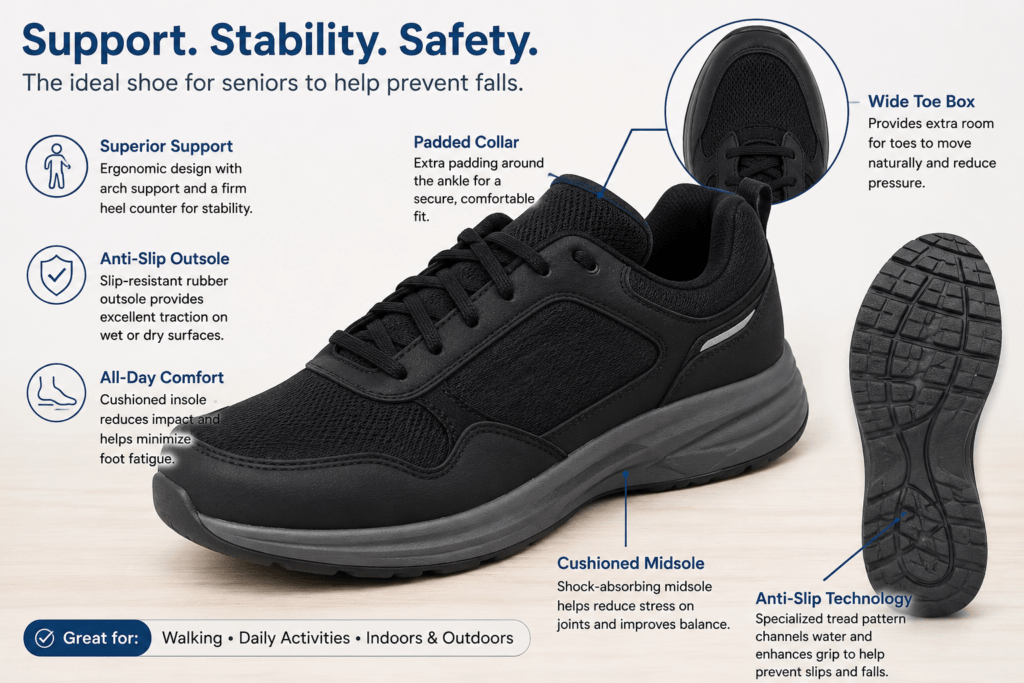
Slippery soles and worn bottom treads are asking for trouble, especially on smooth kitchen floors or wet sidewalks. Outsoles made from grippy rubber, designed with little grooves or a textured pattern, help shoes stay planted. Some shoes are tested to workstyle slip resistance standards; those can be really reliable for wet surfaces. Avoid thin foam soles or anything with a smooth, shiny bottom.
Secure & Adjustable Closure Systems
I like closures that let you tighten or loosen the shoe as needed, like Velcro straps, bungee laces, or classic shoelaces. These keep the foot stable inside the shoe and help stop sliding or the shoe flopping off. Velcro is a favorite for those dealing with arthritis or limited hand strength since it’s way easier than tying laces. Zippers and handsfree entry shoes are popping up more now too.
Roomy Toe Box & Good Fit
Toes need space to wiggle and spread out. Cramped toes won’t help with balance, and can lead to blisters, bunions, or discomfort. Look for “wide” or even “extrawide” options if you’re shopping for someone with swelling or foot issues. Feet change shape as we age, so doublecheck sizing and favor brands with flexible return policies. Comfort really changes how confident a person feels with every step.
Supportive Heel and Arch
An enclosed heel, nothing that slides off easily, adds stability. Some shoes have extra heel padding or a molded cup to help hold the heel in place and prevent wobbling. For those with flat feet or arch pain, in-shoe support also provides relief, whether it’s built in or with removable insoles. Having these supportive features makes walking smoother and safer.
My Top Shoe Recommendations for Fall Prevention
Propét Stability Walker
My goto for allpurpose walking thanks to its sturdy rubber sole, supportive base, and range of width options. The combination of Velcro or tie closure, a firm heel counter, and a cushioned but stable sole works well for steadying each step. It’s a good pick for everyday errands or walking at the park or indoors.
- Pros: Durable outsole, lots of sizes, works for orthotics
- Cons: Not the most fashionable option, but it prioritizes stability
New Balance 928v3
This one’s popular with physical therapists for a reason. The slipresistant tread and rollbar technology help keep feet and ankles aligned. Tie laces require some dexterity, but the support and grip make this sneaker worth a look for active seniors who like being out and about on different terrains.
- Pros: Excellent traction, wide/extrawide sizing, good for flat feet
- Cons: Can run heavy or chunky for some tastes
Silverts Comfort Shoe
If swelling, bunions, or limited mobility is an issue, the easytouch closure on this shoe really helps. The extrawide opening more or less lets you drop the foot in and close it up without a lot of tugging. Built mainly for indoor or light outdoor use, it’s a soft lightweight option well suited for around the house or short outings.
- Pros: Simple to put on, roomy fit, affordable
- Cons: Not built for long outdoor walks or rougher ground
Orthofeet Quincy Stretch
This stretchy, seamfree shoe feels almost like a slipper, but it’s got real support beneath. I usually recommend it for people living with diabetes or sensitive feet. The outsole has enough traction for safe steps indoors or outside, and it accommodates a lot of different foot shapes thanks to its give and soft structure.
- Pros: Very comfortable, adjustable fit, works for swelling
- Cons: Pricey, can be too soft for those who want a firmer feel
Key Shopping Tips for Senior Shoes
Try Shoes On At Home
Shopping online is convenient, but it can be tricky to guess the right fit. Amazon make it easy ordering and returning different sizes to see which feels better, especially with foot swelling. Try shoes at the end of the day when feet are likely to be most swollen; this gives you the best picture of real world comfort and prevents pinching.
Update Shoes Regularly
I’ve noticed it’s easy to hold on to an old favorite for too long. Those worn soles and frayed linings sneak up on you, and older shoes lose tread and support, making them riskier. It’s a good idea to check the bottom, inside padding, and heel when deciding if it’s time for a new pair. Even a shoe that looks fine on the outside may be a slip risk if the grip is worn down.
Avoid These Common Pitfalls
- Backless slippers or sandals, which fall off easily and lead to trips
- Heels or thick platform soles, unstable and uneven for seniors
- Narrow or pointytoed shoes that crowd the toes and reduce balance
- Shoes with minimal support or thin soles, since these cause foot fatigue and poor footing
FAQ: Choosing Fall-Prevention Shoes for Seniors
- Do orthopedic shoes really help prevent falls?
Good orthopedic shoes can improve stability and make walking more comfortable. While they don’t erase all fall risks, supportive features do give an edge against trips and slips. - Is it better to use Velcro or laces?
Velcro is easier for anyone with grip or finger issues. Both can work if the fit is right and the shoe is snug. What really matters is that the closure system helps keep the shoe secure so it doesn’t slip during use. - Should insoles be replaced?
Yes, a worn or flattened insole can cause slipping inside the shoe and throw off balance. Swapping in a new insole, or a specialty one from a podiatrist, can really help with comfort and support.
Final Checkpoints & Next Steps
Finding the best fallprevention shoes for seniors comes down to some straightforward basics: slipresistant soles, secure fit, comfortable closure, and space for the toes. Brands like Propét, New Balance, Silverts, and Orthofeet put a lot of effort into making shoes just for older adults. Careful research helps buyers choose shoes that really match each person’s needs, especially if custom features are important.
If you’re shopping for yourself or a loved one, take measurements, try different styles, and always check real customer feedback. Stable, supportive shoes go a long way toward safer steps and peace of mind. Keeping comfort and safety at the forefront can make walking much more secure and enjoyable as we age.