
Affiliate Disclosure: This post contains affiliate links. If you purchase through one of these links, I may earn a commission at no additional cost to you. As an Amazon Associate I earn from qualifying purchases.
Staying safe and independent at home becomes increasingly important as we get older. Mobility problems can turn everyday tasks into real challenges, but bringing in the right equipment makes a big difference. Over the years, I’ve tried, recommended, and even installed all sorts of home devices for older adults—either for family members or clients—and I’ve watched these products make daily life safer, smoother, and a bit more worry-free.
If you’re feeling anxious about falls, finding it tough to move through your house, or just want peace of mind for yourself or someone you care about, a few targeted updates at home can go a long way. These home mobility devices are more than just tools for getting around; they boost confidence and turn routines that might be stressful into something manageable and safe.
Let’s jump right in: here are my top 10 mobility devices for seniors, complete with practical advice and explanations for each one.
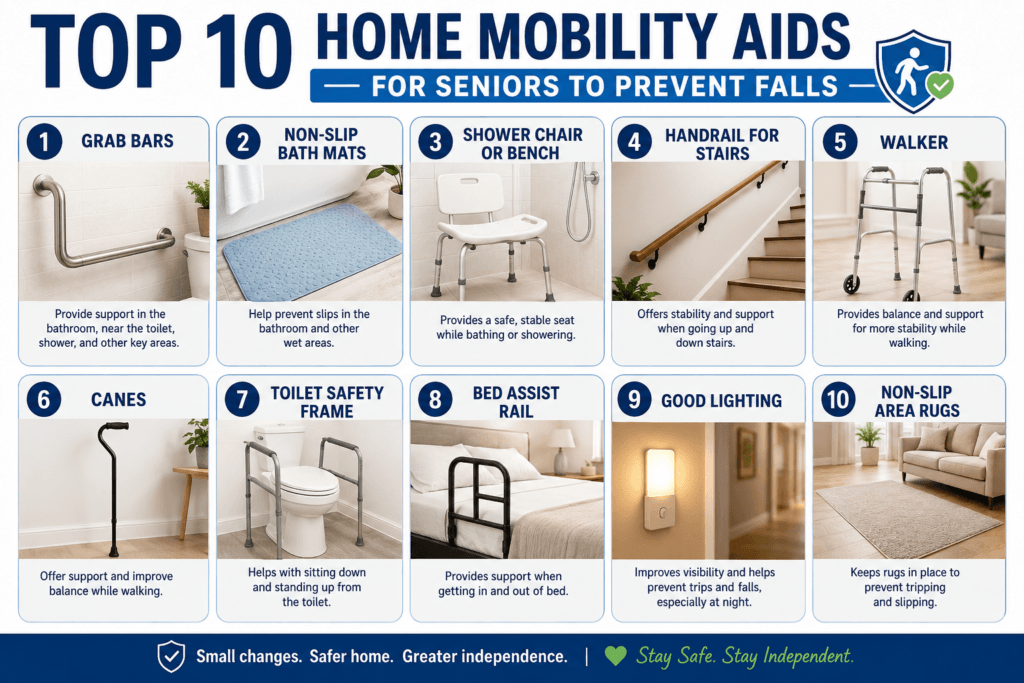
1. Grab Bars: Extra Support Where it Counts
give you something steady to hold onto in spots where falls are common, such as bathrooms, around beds, or at entryways. You can put them next to the toilet, inside the shower, or along busy hallways. There’s a lot of choice out there—straight bars, angled bars, and some with textured grips for more control. It’s a must to install them securely into wall studs so they can handle full body weight if someone slips or loses balance.
Where Grab Bars Help Most:
- Getting in and out of the tub or shower
- Standing up from the toilet
- Navigating a few stairs or steps at entryways
Grab bars are ideal for people with muscle weakness, balance issues, or arthritis. Sometimes, local agencies will offer home evaluations and can help with installation.
2. Nonslip Bath Mats: Prevent Bathroom Accidents
Wet bathroom floors are a major fall risk. Nonslip bath mats are a simple solution. Seek out mats with strong suction cups to keep them in place, and rubber surfaces for safe footing even when wet. I always put one inside tubs or showers and another outside, so feet stay steady after bathing.
Quick Tips for Choosing Bath Mats:
- Pick mats with drainage holes to prevent pooling water
- Wash them often to keep mildew away
- Make sure the mat stays put once it’s laid down
Adding a colorful bath mat can also make the bathroom look more cheerful, adding a bit of nextlevel cool to the space while keeping it safe.
3. Shower Chair: Sit Down and Stay Safe
Standing for a shower can be tough or risky for seniors who have trouble with balance or fatigue. That’s why I’m a big fan of the classic shower chair. They’re made to be waterproof, rock-solid, and nonslip. Plenty of models include adjustable legs for odd-shaped floors, and lots have armrests and back support. For even more security, match them with grab bars.
Shower Chair Benefits:
- Makes it easier to bathe without getting too tired
- Cuts down falls in a slippery zone
- Makes for a more calming, comfortable shower
Consider a transfer bench if someone needs more help moving in and out of the tub—it lets you sit down outside and slide in safely.
4. Stair Hand Rails: Safer Stair Climbing
Stairs can be a real hazard. Adding strong hand rails on both sides of a staircase gives support you can trust. I recommend continuous rails so there’s always something to grab, no matter where you are. If you only have a single rail, adding a second one gives a huge boost, especially if one side of your body is weaker.
Best Practices for Stair Rails:
- Set rails at a height that’s comfortable for gripping
- Stick with rounded, non-slip surfaces
- Inspect rails now and then to make sure they’re solid
5. Walker: Reliable Balance and Support
Walkers are probably the most well-known mobility aids for older adults, and they’re popular for good reason. Whether you pick a basic two-wheeler or a fancier rollator (with four wheels and a seat), a walker gives solid support for anyone who’s a bit wobbly on their feet. From experience, rollators that include a fold-down seat and storage pouch see the most action—people appreciate taking breaks and carrying things hands-free.
When to Use a Walker:
- To add stability for walks inside or outdoors
- For longer trips and errands
- Recovering from an injury or illness
There are even lightweight models and walkers specifically designed for narrow hallways, making them ideal for many home layouts.
6. Cane: Simple, Portable Stability
Canes serve up extra balance and help take weight off sore joints. They come in all styles—singletip, quadtip (for steadiness), and even foldable canes for travel. Pick the right fit: the handle should be level with your wrist when arms hang at your side. Always recommend a rubber bottom tip so it grips hard floors and tiles.
Tips for Cane Use:
- Choose a handle that feels good in your hand
- Check and swap the cane tip every now and then
- Practice using the cane on both soft and hard floors, so nothing feels unfamiliar
For some, a walking stick with a built-in flashlight is a smart bonus for evening trips around the house.
7. Toilet Seat Frame: Confident, Easy Transfers
Standard toilets can be too low or loose for those with joint pain. A toilet seat frame adds solid handles to help push yourself up without straining your knees or hips. Some have bonus features: extra height, padded arms for comfort, and easy-clean materials. It’s best to find a frame that hugs the toilet securely and stands steady on its rubber feet.
Added Comfort Features:
- Padded grips for hands that get sore
- Legs that adjust for the right height
- Simple to wipe down surfaces
8. Bed Assist Rails: Safer Bed Mobility
Bed assist rails slide under the mattress, giving you or your loved one something firm to grip when getting in or out of bed. These are perfect for seniors who wake up dizzy or deal with leg weakness. You can even stash a book, remote, or glasses in the built-in pocket. Adding rails to both sides is a good idea for those who might roll during sleep.
When Bed Rails Help Most:
- Getting into or out of bed in mornings and at night
- Reducing chances of falls when waking up
- Finding stability while changing position in bed
9. Lighting: Brighter Paths, Fewer Mishaps
Dim lighting is an overlooked hazard. I always suggest swapping in brighter LED bulbs and setting up motionactivated nightlights in bedrooms, hallways, and bathrooms. Well-lit paths are crucial, particularly for nighttime bathroom runs. Battery-operated stick-on lights can go just about anywhere, and some plug-in models only turn on after dark to save power. For stairs or tricky zones, switches at both the top and bottom of the stairs make life easier for everyone.
Key Lighting Tips:
- Upgrade bulbs in main rooms for more brightness
- Install lights in entryways and at the base of stairs
- Keep a flashlight near the bed just in case
Consider color-changing bulbs for a bit of eye-catching, nextlevel cool atmosphere, which can make night lighting gentler on the eyes.
10. Nonslip Low Profile Area Rugs: Tread Safely, Everywhere
Highpiled or thick rugs can trip anyone, but they’re even riskier for older adults. Nonslip, low profile area rugs help cut down falls and don’t bunch up under walkers or canes. If you love having rugs for comfort, just skip the thick or shaggy types. Smooth, flat rugs with a rubber backing stay put and work well. I usually recommend using doublesided rug tape too, to lock rugs in place and remove curling edges.
Where to Place Safe Rugs:
- Next to beds and sitting areas
- Hallways with high traffic
- By bathroom sinks and in kitchens, wherever water might drip
Matching rug colors to your decor can add a bit of style while keeping trips and stumbles at bay.
Advice for Choosing the Right Mobility Devices
Choosing the best home mobility equipment can get overwhelming since there are so many brands and models out there. My advice is to start with a home safety assessment—lots of occupational therapists do these—or ask your healthcare provider for advice that fits your specific needs. Think about your routine, which rooms you use most, and any medical conditions when picking which devices to put in first.
Quality and fit are important. A secure grab bar or well-sized walker adds real peace of mind. Always read installation instructions carefully and call in a pro for trickier jobs like stair rails. Many communities even offer resources or low-cost help to get these devices installed correctly, ensuring you get the best support possible.
Another smart move is to review your home setup once or twice a year—our needs can change, and sometimes small updates or new products can step up your comfort and safety even further. Keep an open conversation with any caregivers, doctors, or family members about devices that are working or those that might need to be switched up for something better.
Final Thoughts
Creating a safer, more comfortable home for seniors comes down to adding the right equipment in the right spots. These 10 mobility aids help older adults remain active, independent, and confident at home for years to come. Small changes really do stack up to a safer, more enjoyable daily adventure for everyone. If you’re considering options, don’t hesitate to start slow and add items as you spot new needs. With the right support in place, staying at home becomes not just possible but enjoyable and secure.
My mom has an older cane, and sometimes it can be difficult for her to manage, especially when she gets tired, and I worry she could fall. Your article really opened my eyes to the different options available. How can I find a good mobility device that would be safe and easy for her to use?
Thanks for the great question. One of the most important things to remember is that the best mobility device isn’t necessarily the one with the most features—it’s the one that fits your mom properly and that she feels comfortable and confident using.
Since you mentioned that she has more difficulty when she gets tired, I would consider having her evaluated by a physical therapist or occupational therapist. They can look at her balance, strength, walking pattern, and endurance and help determine whether a properly fitted cane is still appropriate or if she might be safer with a walker or rollator.
Whatever device you choose, make sure it is adjusted to the correct height, has good non-slip tips or wheels, is easy for her to maneuver, and doesn’t require more strength or coordination than she comfortably has.
I also recommend involving your mom in the decision. If she likes the device and feels confident using it, she’s much more likely to actually use it consistently.
Sometimes a simple change from an old, poorly fitted cane to the right mobility aid can make a big difference in both safety and independence.